Ah-che-ooo!! Che Guevara's legacy and Covid-19
- rellisci

- Jan 18, 2021
- 5 min read
Updated: Mar 20, 2021
Cian Rellis - 17321736
Had Guevara lived through the Covid-19 pandemic, it's not an outlandish assumption to make that he would have understood the dangerous implications of contracting a respiratory virus. Che, often thought of as the United States most feared enemy, spent more of his life battling with his lungs than imperialism.
It Ain't Easy Being Wheezy

Much like the author of this article, Che was born premature. As an infant, Ernesto was small and delicate. This fact coupled with his father quirky approach to infant
is thought to have contributed greatly to Che's cursed lungs. Hoping to toughen up his son, Che's father would leave him out on their balcony through the Argentinian winters wearing only a nappy. That wasn't enough for Ernesto Sr. who drenched him with ice cold showers and chilling baths (Latson, J., 2015). While Ernesto Jr. did in fact grow up to be a fearless leader and ruthless soldier, there was a price to pay. Ernie Jr. was plagued with asthma and a cough that followed him like a black dog right up to his deathbed.
While Che may have been cursed with a debilitating respiratory illness which followed him around every twist and turn in his life, he never let his asthma hamper his endeavors. Additionally, he never took any real action to ward off these asthma attacks, chain smoking cigars and flying into fits of rage cursing the 'North American exploiters' often triggered asthma attacks that lasted hours (Latson, J., 2015). Che's lack of respect for his own wellbeing did not translate into a similar lack of respect for those who were vulnerable and sick. During his 9-month trip around South America which Che wrote about in The Motorcycle Diaries, Guevara was angered and touched by his experiences with the sick and vulnerable. When he set out on the trip, one of his goals was to gain practical, hands on experience with leprosy. While in Peru he walked with lepers living in the huts alongside a river, trying to understand how they lived. He saw how society had abandoned these people, leaving them to look after themselves. These experiences on his trip transformed Che, and he envisioned of a new approach to medicine where doctors would serve large amounts of people with preventative care and teaching hygiene (Guevara, C., 2003).
How has Che Guevara's legacy equipped Cuba to answer the Coronavirus pandemic?
After overthrowing the Batista regime, a new idea for what Cuba was upheld by the new government and later, in 1976, was written into a new constitution. This included Guevara's dream of free medical care for all of Cuba's people. This began Cuba's medical revolution, with the new government building hospitals and clinics with a focus on underserved areas and peoples of the country. The Cuban healthcare system was continuously developed throughout the 60s and 70s and by 1984 teams of doctors and nurses known as consultorio who served the local communities they lived in had been introduced (Fitz, D., 2021). Cuba's philosophy on providing healthcare to the hardest to reach and least served corners of the country meant that is was only a small leap to extend this healthcare to other nations.

Cuba has a long history of providing assistance to countries experiencing healthcare crises, over six decades, the country has sent over 800 doctors and nurses overseas in times of emergencies. In the midst of a collapsing healthcare system under the strain of Covid-19 patients, some regions in Italy called on these Cubans to help them in their time of need (The Economist. 2021 [2]).
But how did Cuba deal with the virus internally? Thanks to Cuba's state-driven economy and the importance placed on healthcare ingrained into the government, the nation's factories were quickly altered to manufacture masks and other PPE. The Cuban Ministry of Health drew up a response plan that focused on high levels of testing and strict quarantines. Consultorio were assigned to visit different homes each day gathering data about which areas were affected by the virus (Fitz, D., 2021). This data directly influences which services were deployed to which area, effectively democratising Cuba's public health policy, as Che had once envisioned.
A Social Safety Net in a Post-Covid World

As businesses shut down and people were house bound, a unique opportunity in social spending reform arose. Before the pandemic, ideas such as universal basic income seemed futuristic and unrealistic. Now over 65% of European citizens support this policy (The Economist, 2021 [1]). The caricature of the welfare merchant has been overturned and the public seem to be much more empathetic towards those struggling in our society. Governments have a chance to create new social-welfare policies that can be both affordable and help workers furloughed by technological disruption.
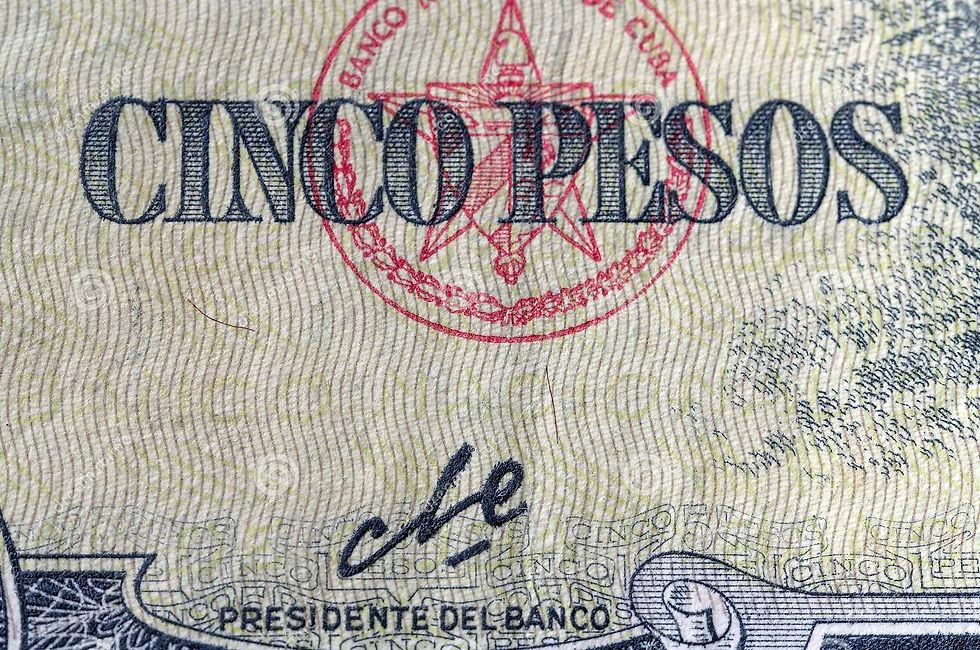
The Cuban Revolution presented Che with a similar opportunity to re-imagine how the economy could work for the workers. Che was appointed as both the President of the Cuban National Bank and the Finance Minister. His approach was radical, and he wasn't afraid to display his disdain for money, famously signing the Cuban bank notes with a simple 'Che' instead of his full name (Sinclair, Andrew Annandale., 2021).
The Unlikely Economist: Che's appointment as President of the Bank of Cuba
Fidel was winding up a Cabinet meeting when a thought suddenly struck him. “By the way,” he said, “I had to fire the head of the National Bank today. Anybody here an economist?” Che’s hand shot up. “I am, chief,” he said. “All right, Che,” said Fidel, “you’re president of the bank.” The meeting over, Castro stayed behind for a private chat with Che. “Say, I never knew you were an economist,” said Fidel. “Economist!” said Che, astounded. “I thought you said Communist!” -(Latson, J., 2015)
While many of Che's programs he implemented as president of the Cuban National Bank were unsuccessful, the core ideals can be looked at as inspiration for policy makers around the world. The emphasis on universal free healthcare was the bedrock for Cuba's social programs and as the western world's mood about social welfare has been forced to evolve by this pandemic, the spirit of Che's vision of healthcare and social supports has an opportunity to live on.
References
Fitz, D., 2021. Monthly Review | How Che Guevara Taught Cuba to Confront COVID-19. [online] Monthly Review. Available at: <https://monthlyreview.org/2020/06/01/how-che-guevara-taught-cuba-to-confront-covid-19/> [Accessed 8 January 2021].
Ft.com. 2021. Cuba looks at trimming social welfare. [online] Available at: <https://www.ft.com/content/8d82eed6-6d5b-11dd-857b-0000779fd18c> [Accessed 5 March 2021].
Guevara, C., 2003. The Motorcycle Diaries. Harper Perennial.
Latson, J., 2015. How Che Guevara Didn't Let Asthma Affect His Ambitions. [online] Time. Available at: <https://time.com/4055772/che-guevara-health/> [Accessed 16 January 2021].
The Economist, 2021 [1]. Bouncing Back: How to make a social safety net for the post-covid world. (9235), p.9.
The Economist. 2021 [2]. Cuba’s doctors are in high demand. [online] Available at: <https://www.economist.com/the-americas/2020/04/04/cubas-doctors-are-in-high-demand> [Accessed 4 January 2021].
TIME, 1960. CUBA: Castro's Brain. [online] Available at: <http://content.time.com/time/subscriber/article/0,33009,869742,00.html> [Accessed 1 January 2021].
Sinclair, Andrew Annandale., 2021. "Che Guevara". Encyclopedia Britannica, 5 Jan. 2021, https://www.britannica.com/biography/Che-Guevara. Accessed 12 January 2021.


Comments